

Shanghai Neurosurgeon’s Unexpected Discovery: Focused Ultrasound Shows Promise in Treating Alzheimer’s
SHANGHAI — It reads like a medical fairy tale, yet it is grounded in rigorous science. A renowned neurosurgeon in Shanghai stumbled upon a potential new treatment for Alzheimer’s disease while trying to save his own mother.
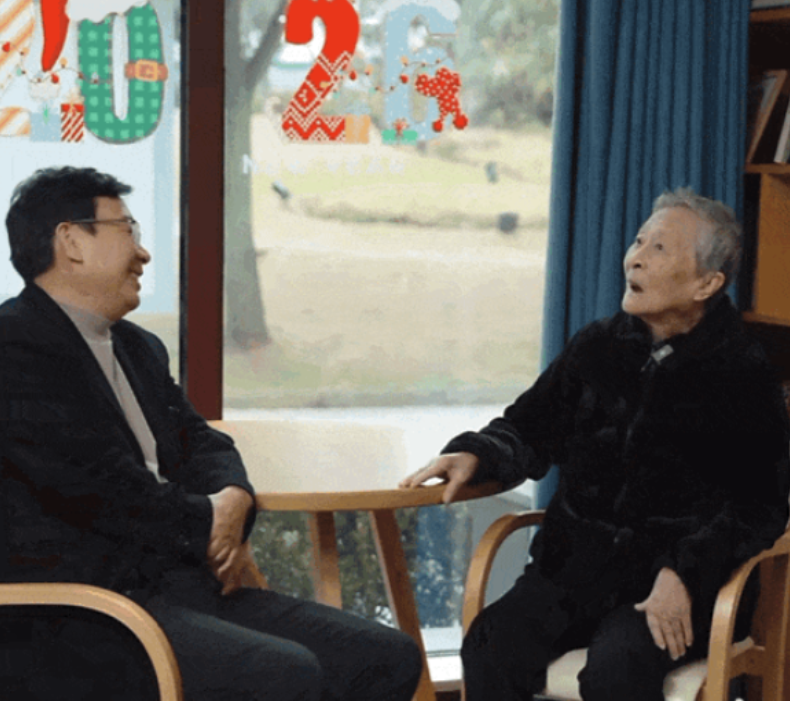
Dr. Sun Bomin, Director of Functional Neurosurgery at Ruijin Hospital, has spent decades decoding the human brain through deep brain stimulation and brain-computer interface technologies. Yet when his mother, then in her nineties, was diagnosed with Alzheimer’s nearly eight years ago, this leading expert felt as helpless as any ordinary son.
“She lost her autonomy,” Dr. Sun recalled. “She no longer recognized her family. Even simple arithmetic became impossible for her.”
An Unexpected “Reboot”
In 2024, Dr. Sun treated his mother with focused ultrasound to relieve symptoms of dystonia, a common movement disorder in elderly patients. The procedure is non-invasive, using precisely targeted sound waves. The team hoped only to calm her tremors; they never expected it to restore her mind.
One month later, the family caregiver noticed an inexplicable change—the fog seemed to be lifting.
“She started calling her son and daughter-in-law by name,” Dr. Sun said. “Her speech became fluent again, and her motor skills improved dramatically.”
In a video now circulating among Chinese medical circles, Dr. Sun tests his mother’s cognitive function with the classic “serial sevens” test.
“What is 100 minus 7?” he asks.
“93,” she answers promptly.
“And 93 minus 7?”
“86.”
It is a simple exchange, yet for a family that had watched a loved one disappear into the haze of dementia, it felt like a miracle.
“Shaking the Grains” — Reorganizing Neural Circuits
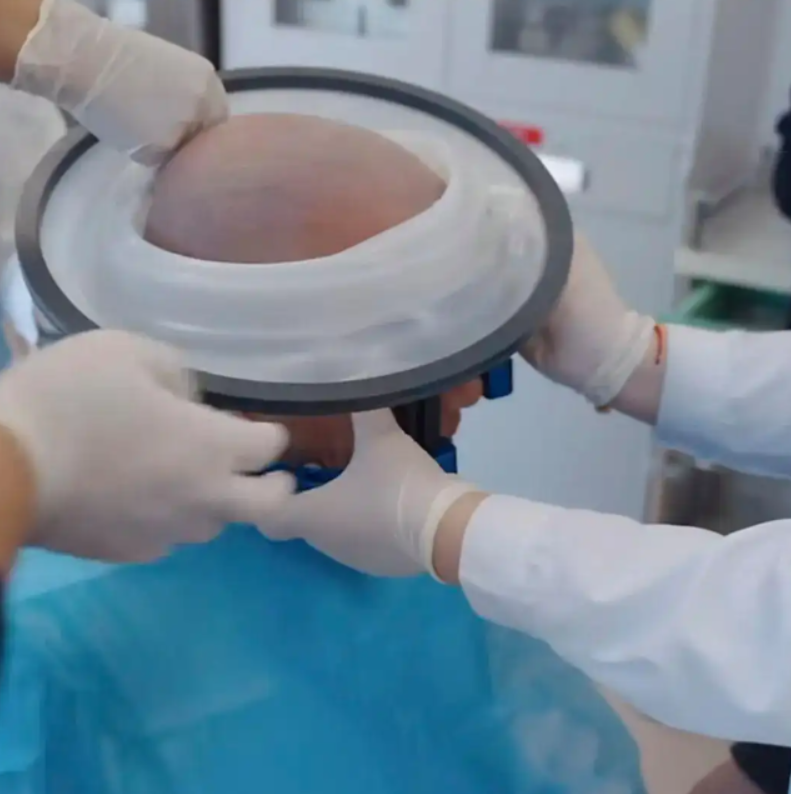
The technology uses a specialized helmet containing 1,024 tiny transducers that emit high-energy ultrasound waves. These waves pass harmlessly through the scalp and skull, converging with pinpoint accuracy on deep brain targets.
Importantly, the procedure does not destroy cells. Instead, it generates high-frequency mechanical oscillations.
Dr. Sun explains the complex neuromodulation with a vivid, everyday analogy: “It’s like using a winnowing basket to shake corn or rice. When you shake it, the mixed-up, messy grains begin to separate and organize themselves into layers.”
In Alzheimer’s disease, he believes this physical vibration “shakes loose” neural circuits that have become stuck or disconnected, effectively “rebooting” the brain’s signaling pathways and restoring cognitive function.
From One Patient to Clinical Hope
Encouraged by his mother’s recovery, Dr. Sun launched a clinical trial last year. Though still in its early stages, the results offer a glimmer of hope to millions of families worldwide facing dementia.
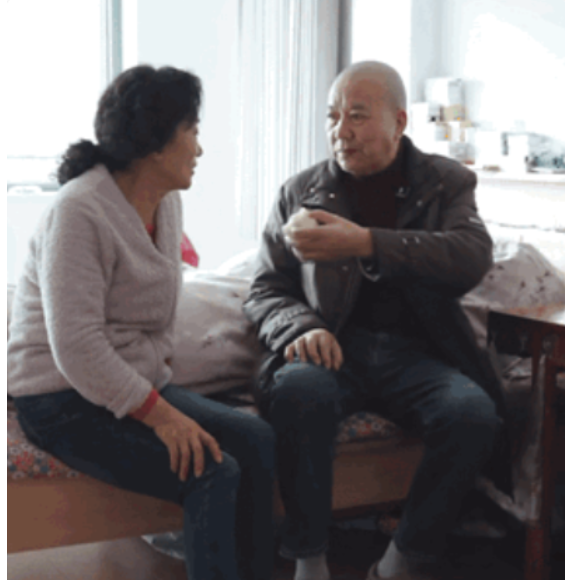
Seven patients have been treated so far, with varied outcomes: two showed rapid and significant improvement, while others experienced only temporary clarity before some symptoms returned.
One particularly moving case stands out. A patient who had struggled with basic daily tasks regained enough independence to handle housework—washing clothes and cleaning. One day, she expressed a wish that would have been unimaginable months earlier: she wanted to go out for karaoke.
“Many medical advances come from accidents,” Dr. Sun reflected. “For a clinician, the most important thing is to observe. When a turning point appears, you must recognize it.”
The medical community remains cautious—this is not yet a universal cure, and the road to fully conquering Alzheimer’s is still long. Yet at Ruijin Hospital, there is a sense of cautious optimism. For the first time in a long while, there is a signal that the darkness of dementia may not be irreversible.
Source: www.ShanghaiDoctor.cn